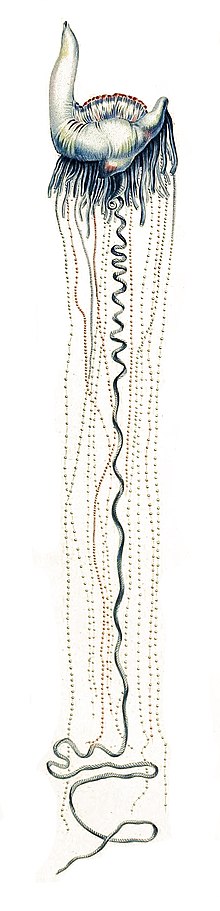
 The Portuguese man of war, or blue bubble, man of war, or floating terror, is a marine cnidarian. The Portuguese man of war is not a jellyfish, but it is a siphonophore, and is a siphonophore because it is made up of other animals called zooids. The man o' war's gas filled bladder, floats at the surface of the ocean, while the rest, are submerged. storms and strong wind blow man o' wars to shore, making them beached but, they still are very deadly with their venom. man o' wars can have a gas bladder the size of 9- 30cm, and tentacles as long as 10- 30m.
Showing posts with label invertebrates. Show all posts
Showing posts with label invertebrates. Show all posts
Friday, April 22, 2016
PORTUGUESE MAN OF WAR
The Portuguese man of war, or blue bubble, man of war, or floating terror, is a marine cnidarian. The Portuguese man of war is not a jellyfish, but it is a siphonophore, and is a siphonophore because it is made up of other animals called zooids. The man o' war's gas filled bladder, floats at the surface of the ocean, while the rest, are submerged. storms and strong wind blow man o' wars to shore, making them beached but, they still are very deadly with their venom. man o' wars can have a gas bladder the size of 9- 30cm, and tentacles as long as 10- 30m.
The Portuguese man of war, or blue bubble, man of war, or floating terror, is a marine cnidarian. The Portuguese man of war is not a jellyfish, but it is a siphonophore, and is a siphonophore because it is made up of other animals called zooids. The man o' war's gas filled bladder, floats at the surface of the ocean, while the rest, are submerged. storms and strong wind blow man o' wars to shore, making them beached but, they still are very deadly with their venom. man o' wars can have a gas bladder the size of 9- 30cm, and tentacles as long as 10- 30m.
Wednesday, March 30, 2016
 Moths are a group of insects related to butterflies, belonging to the order lepidoptera. There are about 160, 000 species of moths, many of which are undiscovered. Most moths are nocturnal
Sunday, March 13, 2016
Flying squid
 The ommastrephidae is a family of squid containing 3 subfamilies, 11 genera, and about 25 species. They are distributed globally and fished for food. The Japanese flying squid makes around half the worlds cephalopod catches. Some members of ommastrephidae are known to have the ability to glide out of the water like a flying fish, earning their common name of flying `squids`.
The ommastrephidae is a family of squid containing 3 subfamilies, 11 genera, and about 25 species. They are distributed globally and fished for food. The Japanese flying squid makes around half the worlds cephalopod catches. Some members of ommastrephidae are known to have the ability to glide out of the water like a flying fish, earning their common name of flying `squids`. Saturday, March 12, 2016
Bees
Bees are insects closely related to wasps and ants, that produce pollen used in making honey.
 Bees are in the superfamily Apoidea.
There are 20, 000 species of bees, in 7 different families, though many bees are undiscovered. They can be found everywhere except polar regions and oceans, everywhere where there is flowering plants (plants with flowers). Some species such as bumblebees, honeybees, and stingless bees live in colonies. Bees have adapted to feed on nectar and pollen using a long tongue. The pollen produced by bees is used as food for larvae.
Bees are insects closely related to wasps and ants, that produce pollen used in making honey.
Bees are in the superfamily Apoidea.There are 20, 000 species of bees, in 7 different families, though many bees are undiscovered. They can be found everywhere except polar regions and oceans, everywhere where there is flowering plants (plants with flowers). Some species such as bumblebees, honeybees, and stingless bees live in colonies. Bees have adapted to feed on nectar and pollen using a long tongue. The pollen produced by bees is used as food for larvae.
Friday, March 11, 2016
 Ammonites
Ammonites are an extinct group of mollusks in the subclass Ammonoidea of the class cephalopoda. The ammonites are more related to octopus and squids than nautiloids (shelled cephalopods), such as the living nautilus. The first species appeared in the Devonian period, then died out in the late crutaceous- paleogene period, but fossils can still be found today.
Thursday, March 3, 2016
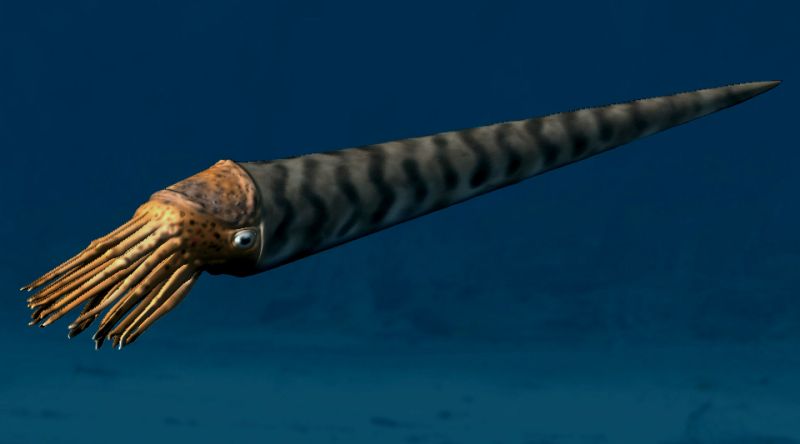 existed since the Late Cambrian and are still found today as nautiluses.
 Monday, February 29, 2016
SQUIDS
Squids are Cephalopods in the order Teuthida, which has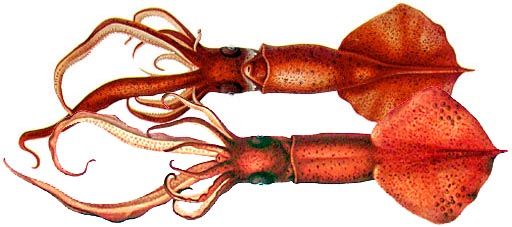
about 304 species. Like all Cephalopods, squids have a head, arms, bilaterally symmetrical, fins, and mantle. Like cuttlefish squids have 8 arms arranged in pairs of two, most of the time longer. Squids are strong swimmers, some can even `fly` through the water doing a long glide or propels themselves through the water fast.
Squids are in the class Cephalopoda, subclass Coleoidea, and order Teuthida, which has two major suborders, Myopsina and Oegopsina. Teuthida is the biggest cephalopod order including 300 species and 29 families.
The order Teuthida is a member of the suborder Decapodiformes (in Greek meaning `ten legs`). Two other orders of Decapodiformes cephalopods are squids, recognizable for their long slimy arms and elongated body. They are bobtail squids in the order Sepiolida and the rams horn squid Spirulida. The vampire squid is more related to octopuses than squids.
Members of Cephalopoda:
Nautiloids: nautiluses
Ammonoidea: Ammonites
Belemnoidea: extinct belemnoids
Spirulida: ram`s horn squid
Sepiida: cuttlefish
Sepiolida: bobtail squids
Teuthida: squid
Octopoda: octopus
Vampyromorphida: vampire squid
Loliginidae: inshore, calamari, grass squid
Ancistrocheiridae: sharpear enope squid
Architeuthidae: giant squid
Batoteuthidae: bush-club squid
Chtenopterygidae: comb-finned squids
Cranchiidae: glass squids
Gonatiae: armhook squid
Histioteuthidae: jewel squid
Joubiniteuthidae: Joubin`s squid
Lepidoteuthidae: Grimaldi scaled squid
Magnapinnidae: bigfin squid
Mastigoteuthidae: whip-lash squid
Ommastrephidae: flying squid
Squids are Cephalopods in the order Teuthida, which has
about 304 species. Like all Cephalopods, squids have a head, arms, bilaterally symmetrical, fins, and mantle. Like cuttlefish squids have 8 arms arranged in pairs of two, most of the time longer. Squids are strong swimmers, some can even `fly` through the water doing a long glide or propels themselves through the water fast.
Squids are in the class Cephalopoda, subclass Coleoidea, and order Teuthida, which has two major suborders, Myopsina and Oegopsina. Teuthida is the biggest cephalopod order including 300 species and 29 families.
The order Teuthida is a member of the suborder Decapodiformes (in Greek meaning `ten legs`). Two other orders of Decapodiformes cephalopods are squids, recognizable for their long slimy arms and elongated body. They are bobtail squids in the order Sepiolida and the rams horn squid Spirulida. The vampire squid is more related to octopuses than squids.
Members of Cephalopoda:
Nautiloids: nautiluses
Ammonoidea: Ammonites
Belemnoidea: extinct belemnoids
Spirulida: ram`s horn squid
Sepiida: cuttlefish
Sepiolida: bobtail squids
Teuthida: squid
Octopoda: octopus
Vampyromorphida: vampire squid
Loliginidae: inshore, calamari, grass squid
Ancistrocheiridae: sharpear enope squid
Architeuthidae: giant squid
Batoteuthidae: bush-club squid
Chtenopterygidae: comb-finned squids
Cranchiidae: glass squids
Gonatiae: armhook squid
Histioteuthidae: jewel squid
Joubiniteuthidae: Joubin`s squid
Lepidoteuthidae: Grimaldi scaled squid
Magnapinnidae: bigfin squid
Mastigoteuthidae: whip-lash squid
Ommastrephidae: flying squid
Friday, February 26, 2016
POLYCHAETE WORMS
 Polychaete worms are scale worms found in marine habitats. These worms are sometimes called 'bristle worms' because they often bear spines. These worms can be found in small rivers, all the way to the deepest depths of the ocean, as in the Challenger Deep expedition, a small 2-3cm polychaete worm was found right at the bottom of the Mariana trench. There are more than 100,000 species of polychaete worms. Common representatives of polychaete worms are the lugworm, sandworm, and clamworm. Only 2% (168 species) of the polychaetes are found in fresh water. Polychaetes range in size from 2cm to 3m.
Polychaete worms are scale worms found in marine habitats. These worms are sometimes called 'bristle worms' because they often bear spines. These worms can be found in small rivers, all the way to the deepest depths of the ocean, as in the Challenger Deep expedition, a small 2-3cm polychaete worm was found right at the bottom of the Mariana trench. There are more than 100,000 species of polychaete worms. Common representatives of polychaete worms are the lugworm, sandworm, and clamworm. Only 2% (168 species) of the polychaetes are found in fresh water. Polychaetes range in size from 2cm to 3m.
BEETLES
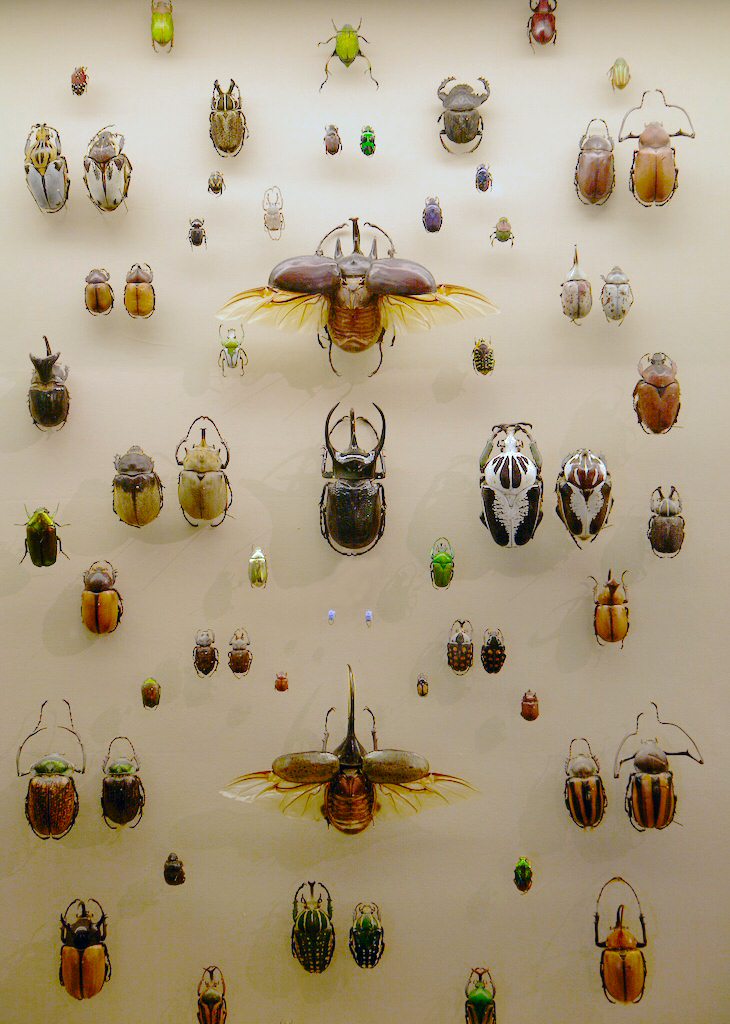
Beetles are a group of insects from the family Coleoptera. About 25% of earth's life is beetles, and only about 40% of the beetles on earth are discovered. There are 400,000 known species, and estimated about 1,000,000 beetles in total, leaving about 60% more to discover. The distribution of beetles is basically worldwide, besides polar regions and oceans, but everywhere else you can find beetles. They often feed on plants, fungi, and dead humus (debris on forest floor), and some feed on other invertebrates. some even feed on birds and mammals. Some species of beetles are pests, feeding off crops and destroying forests. But others, such as ladybirds or ladybugs (family Coccinellidae), feed on beetles and other invertebrates that destroy crops and forests, helping control the number of dead trees or destroyed crops.
Beetles are a group of insects from the family Coleoptera. About 25% of earth's life is beetles, and only about 40% of the beetles on earth are discovered. There are 400,000 known species, and estimated about 1,000,000 beetles in total, leaving about 60% more to discover. The distribution of beetles is basically worldwide, besides polar regions and oceans, but everywhere else you can find beetles. They often feed on plants, fungi, and dead humus (debris on forest floor), and some feed on other invertebrates. some even feed on birds and mammals. Some species of beetles are pests, feeding off crops and destroying forests. But others, such as ladybirds or ladybugs (family Coccinellidae), feed on beetles and other invertebrates that destroy crops and forests, helping control the number of dead trees or destroyed crops.

Thursday, February 25, 2016


JELLYFISH
Jellyfish or jellies, are jellylike invertebrates in the phylum Cnidaria. They are free swimming animals that contain an umbrella like gelatinous bell with trailing stinging tenticals. Jellyfish are found world wide, from shallow waters to the deepest depths. Jellyfish roamed the oceans for about 500 million years, possibly 700 million years, being the longest lived multi-organ animal.
The popular English name for these creatures are jellyfish, and other creatures that have a gelatinous body, like comb jellies (or Ctenophores)
OCTOPUS
 An octopus (or octopi, or octopodes) is a cephalopod mollusk in the order Octopoda. It has 2 eyes and eight arms (hence name octo, meaning eight) and like other cephalopods it is bilaterally symmetric. The octopus also has a beak right in the center of the tenticals. The octopus does not have an external or internal skeleton, though some species have shells like the nautilus.
Subscribe to:
Posts (Atom)